50
Celebrating 50 years of learning, international activism, and innovation in Japanese language education at Shinjuku Japanese Language Institute.
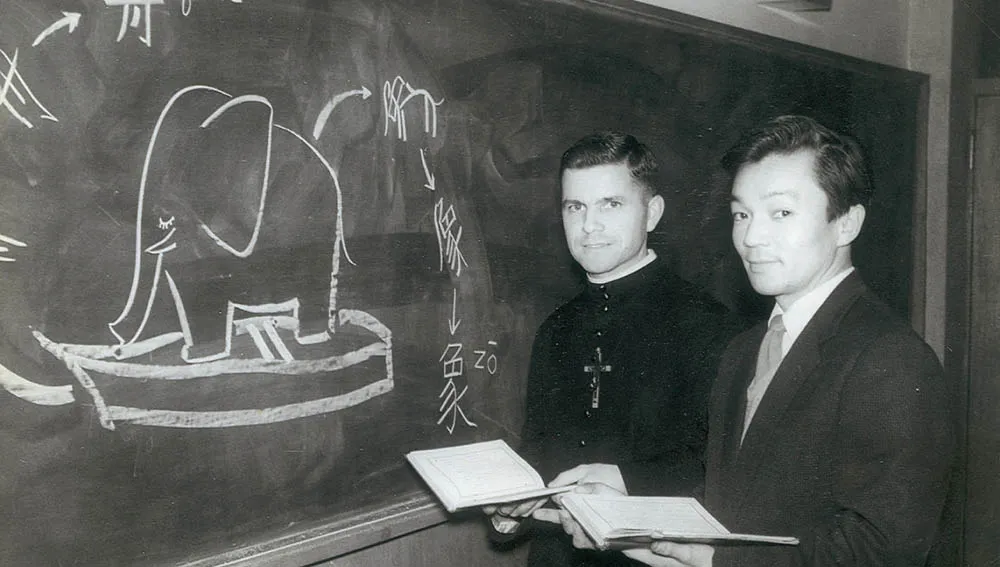
A Revolutionary New Way of Learning:
The Ezoe Method
“How can students learn Japanese more effectively?” This question became the foundation of the Ezoe Method, a visual and intuitive system developed by Takahide Ezoe, turning abstract grammar into symbols, colors, and gestures. It wasn’t just a teaching method—it was a bridge that helped students of all backgrounds, even those with hearing impairments, grasp the core of the language.
Over time, it evolved into a tool for both students and teacher training.
From Modest and Family Beginnings
It all began in Shinjuku, where Takayoshi Ezoe, his wife Setsuko, and their eldest son Takahide shared a dream: to make the Japanese language accessible to learners from around the world. At a time when very few schools in Japan welcomed foreign students, it was such a challenge. Classes were taught the old-fashioned way, using English as a crutch, but the Ezoe family already had a different vision. A vision that would radically change the way of teaching Japanese.
